

When a classroom works well, students don't think about the lighting, the wall color or how sound travels. When it doesn't, glare, noise and visual clutter quietly drain attention all day. These "hidden" factors are worth planning just as carefully as furniture.
Lighting
Use daylight, control glare
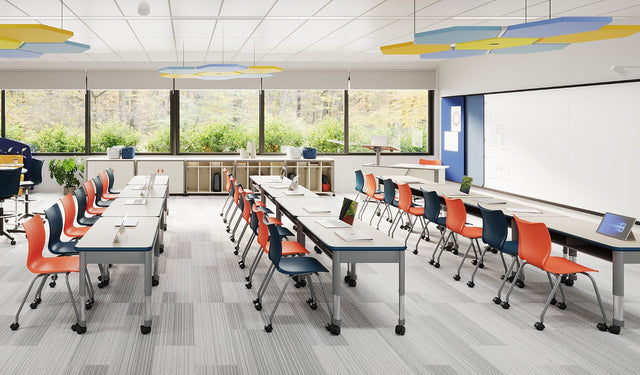
Natural light makes rooms feel more pleasant and alert. But direct sun on screens and work surfaces causes glare. Blinds or shades let teachers balance daylight with visibility. (Proacademy also offers blinds and blackout solutions for classrooms.)
Layer artificial light
Even, flicker-free overhead lighting is the baseline. Dimmable zones let teachers lower light near the display while keeping work areas bright. Task lamps can soften a reading corner.
Mind the screens
Place interactive displays perpendicular to windows where possible, and avoid seating students facing directly into a bright window.
Color
Color sets a room's mood, but more is not better. Many designers recommend:
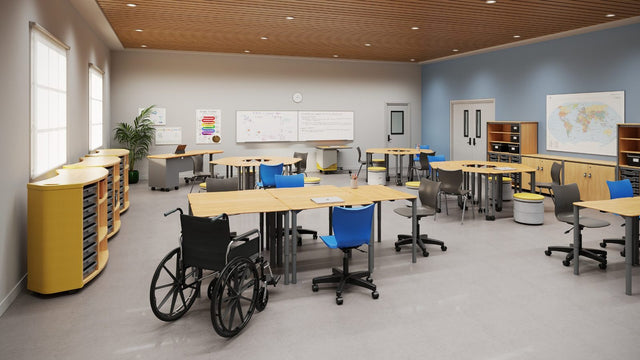
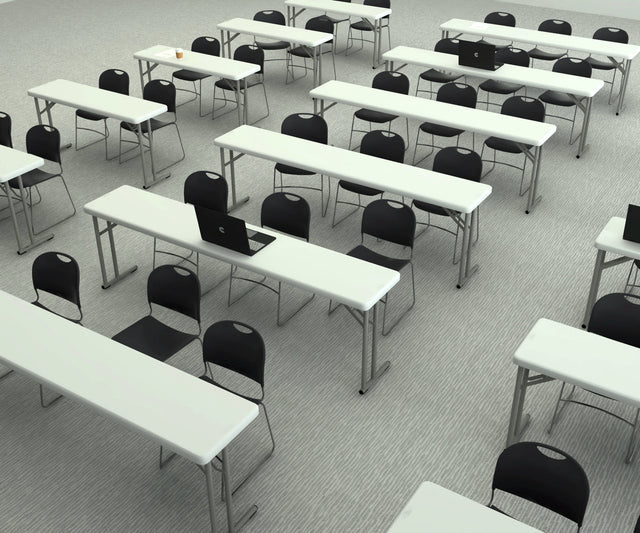
- Calm, light base colors for walls and large furniture surfaces, so the room feels open.
- Accent colors on chairs, a feature wall or soft seating to add energy and define zones.
- Age-appropriate choices: brighter accents for early learners, more muted palettes for older students.
- Less visual clutter: a few curated displays rather than every inch of wall covered.
Furniture finishes are an easy way to bring in color. Many student chairs come in a range of shell colors that can coordinate with school colors.
Acoustics
Classrooms with hard floors, walls and ceilings echo. Noise makes it harder to hear the teacher, especially for younger students and those with hearing or attention difficulties. To reduce noise:
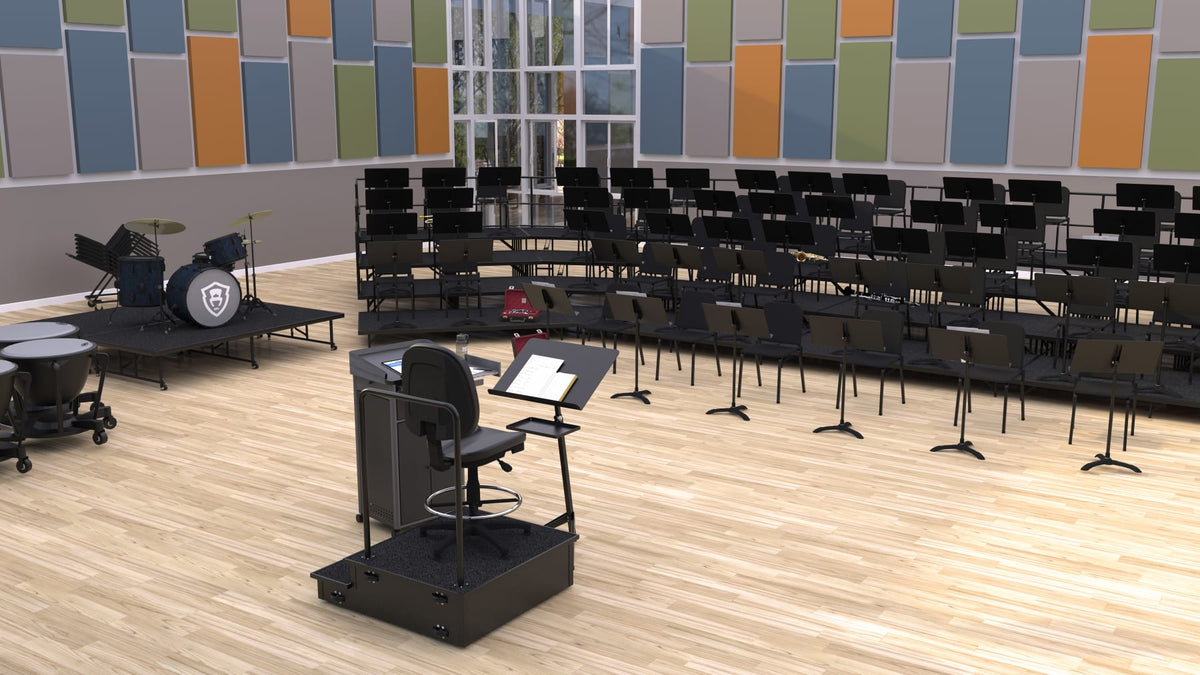
- Add soft surfaces: rugs, acoustic panels, upholstered seating and tackable wall panels absorb sound.
- Use quiet glides and casters so moving chairs and desks doesn't scrape.
- Create zones: separate noisy collaboration areas from quiet work areas.
- Consider sound-absorbing dividers for libraries and open learning spaces.
Temperature and air
A stuffy, overheated room makes students drowsy. Good ventilation and comfortable temperatures support attention. Arrange furniture so vents and windows aren't blocked.
Bring it together
When you plan a furniture refresh, think about the whole environment. Proacademy Furniture can recommend finishes, soft seating, acoustic options and window treatments as part of your free CAD layout. Request a quote.