

How you arrange a classroom shapes how students interact, where they look and how easily the teacher can move around. There is no single "best" layout. The right choice depends on the lesson. Here are seven common arrangements, what each does well, and what kind of furniture makes them work.
1. Traditional rows
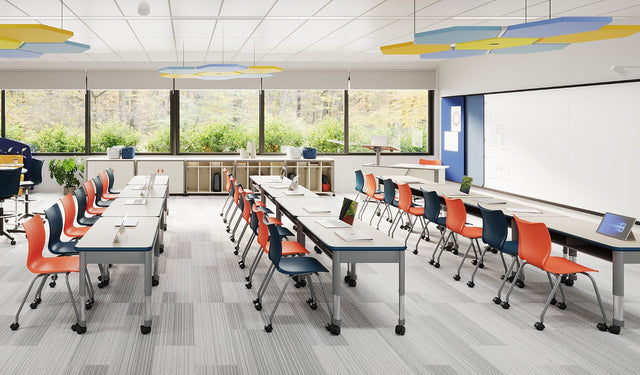
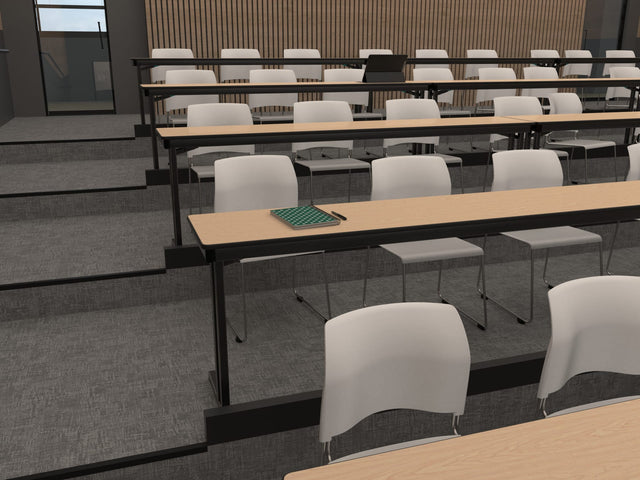
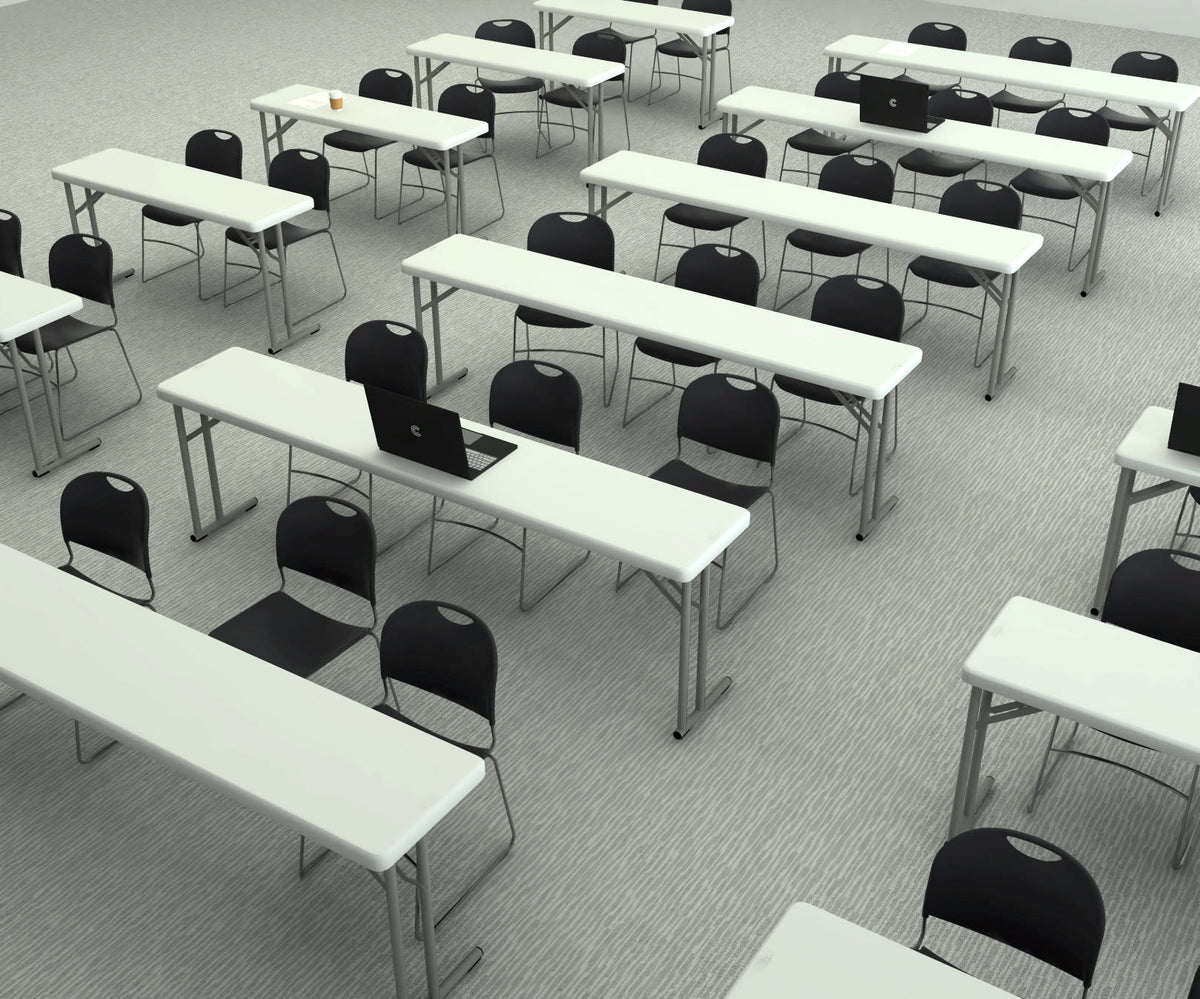
Best for: testing, direct instruction, independent work.
Rows keep attention on the front of the room and minimize distractions between students. The trade-off is limited interaction and harder access for the teacher to reach students in the back.
2. Pairs
Best for: think-pair-share, partner reading, peer review.
Desks side by side in rows keep the focus forward while making quick partner work easy. A good everyday compromise.
3. Clusters or pods
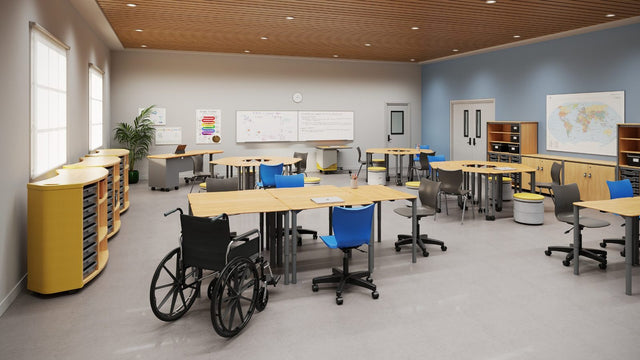
Best for: collaborative projects, stations, small-group learning.
Groups of four to six desks or a shared table encourage discussion and teamwork. Trapezoid and curved desks create clusters with no awkward corners.
4. Horseshoe (U-shape)
Best for: class discussions, seminars, demonstrations.
Everyone can see each other and the front of the room, and the teacher can step into the middle. Works best in rooms with fewer than about 25 students.
5. Circle or Socratic seminar
Best for: discussion-based lessons, morning meetings, debates.
No one sits at the head of the class. Lightweight chairs or soft seating make it easy to form a circle for part of a lesson.
6. Learning stations / zones
Best for: rotations, differentiated instruction, elementary literacy and math blocks.
The room is divided into areas such as a teacher table, a tech station, a reading nook and a hands-on area. Mobile storage and dividers help define each zone.
7. Open-center / combination
Best for: presentations, movement activities, flexible project time.
Furniture is pushed toward the walls to open the middle of the room. This is easiest with stacking chairs and desks or tables on casters.
Choosing furniture that supports multiple layouts
- Mobile desks and tables with locking casters
- Combinable shapes like trapezoids and curves
- Lightweight, stackable chairs
- Mobile storage and whiteboards to define zones
With the right pieces, a teacher can move between three or four of these layouts in a single day. Read more about movable classrooms.
Try layouts before you buy
Proacademy Furniture prepares a free CAD layout of your room showing how different arrangements fit your actual dimensions and furniture choices. Request your layout, or browse real rooms in our IdeaWise gallery.