

When schools think about improving learning, they usually think about curriculum, staffing and technology. The physical environment is easy to overlook, yet students spend roughly six to seven hours a day in it. The chairs they sit on, the tables they work at and the way the room is arranged all send signals about how learning is supposed to happen.
The room teaches, too
Educators sometimes call the classroom environment "the third teacher", alongside the teacher and the students themselves. A room arranged in rows tells students to face forward and listen. A room arranged in small clusters tells them to talk and work together. A room with a cozy reading corner tells them that reading is something to enjoy. Furniture is one of the main tools for setting those expectations.
Five ways furniture affects learning
1. Comfort and focus
Students who are uncomfortable shift, fidget and lose attention. Chairs and desks that are the wrong size for a child's body are a common cause. Correctly sized, ergonomic student chairs help students sit well and stay engaged longer.
2. Collaboration
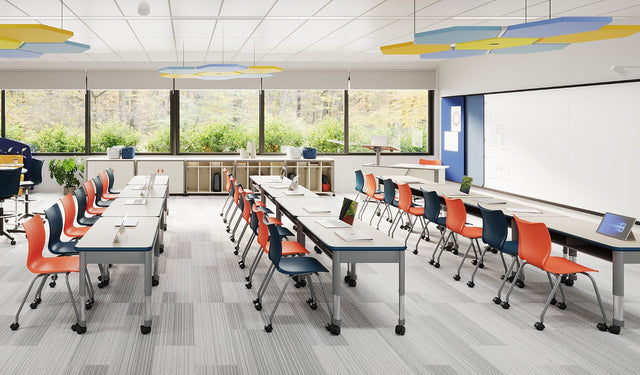
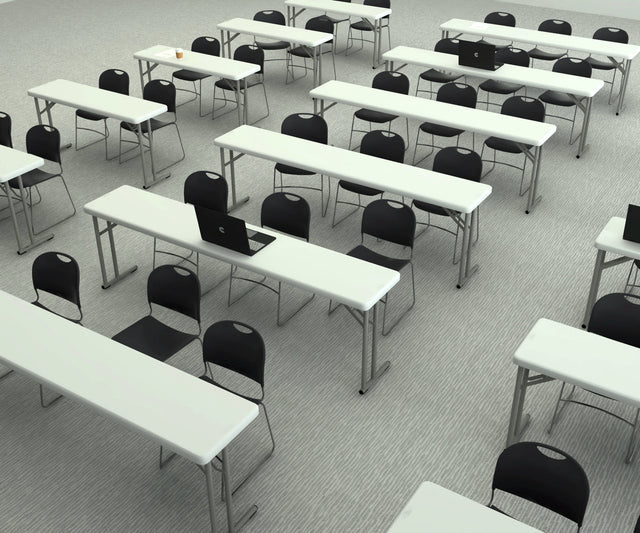
Group work is difficult when desks are heavy, fixed or awkwardly shaped. Tables and desks that nest together quickly make collaboration a natural part of the day rather than a disruptive rearrangement.
3. Movement
Children are not built to sit still for hours. Options like stools, standing-height tables and active seating give students a sanctioned way to move, which many teachers find reduces disruptive behavior.
4. Organization and flow
Clutter is distracting. Good storage, clear walkways and defined zones help students know where things are and move through the room safely. Classroom storage is often the most underrated part of a refresh.
5. Ownership and belonging
Students treat spaces better when they feel the space was designed for them. Giving students some choice in where and how they work builds responsibility and pride in the room.
What a well-designed classroom looks like
- Furniture sized for the age group using it
- A layout that can change between instruction, group work and independent work
- Clear sight lines to the teacher and the main display
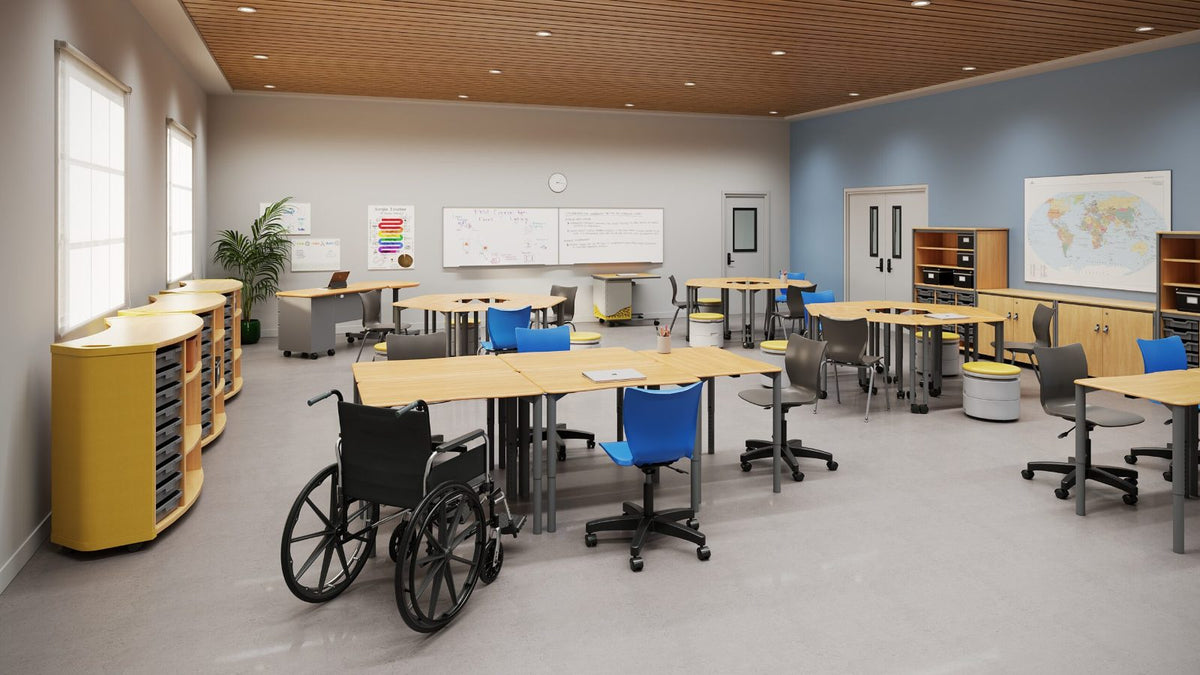
- Wide, safe walkways and easy access for students with mobility needs
- Storage that keeps materials organized and off the floor
- A mix of seating types that support different tasks
- Durable, easy-to-clean surfaces
Beyond the classroom
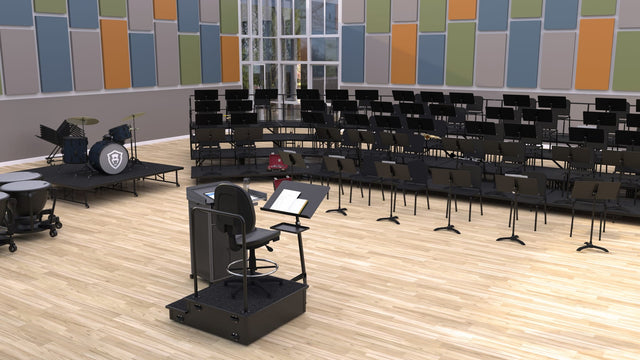
The same principles apply to libraries, cafeterias, science labs and common areas. A cafeteria with movable tables can double as an assembly space. A library with soft seating and group tables becomes a place students want to spend time. Every space in a school is a learning space.
Planning your next space
Whether you are refreshing one room or furnishing a new building, the planning matters as much as the products. Proacademy Furniture provides a free CAD layout, helps you choose the right mix of products, and handles delivery, assembly and placement so rooms are ready on day one.
See examples in our IdeaWise gallery or talk to a furniture specialist about your school.