

Ask any teacher: some students simply can't sit still. Tapping, rocking and shifting are often signs that a child needs movement to stay alert, not that they aren't paying attention. Active seating gives students a controlled way to move while they work.
What is active seating?
Active seating is any seat that allows gentle motion. Common types include:
- Wobble stools: a rounded base lets students tilt and rock in any direction.
- Rocker and flex chairs: chairs whose frame or shell flexes slightly front to back.
- Balance-ball chairs: a stability ball held in a frame so it can't roll away.
- Kneeling chairs and perch stools: encourage an open hip angle and frequent posture changes.
- Floor rockers and cushions: popular in elementary reading areas.
Why teachers use it
- Movement without disruption. Students can fidget quietly in place instead of getting up or distracting neighbors.
- Core engagement and posture changes. Small, frequent movements help students avoid slumping.
- Choice. Offering a few active seats gives students a say in how they learn best.
- Inclusion. Some students with attention or sensory needs benefit from movement options; any accommodations should follow each student's plan and specialist guidance.
How to introduce active seating
- Start small. Add a few pieces rather than replacing every chair.
- Set expectations. Teach students how to use the seat safely: feet on the floor, no tipping, the seat is a tool, not a toy.
- Rotate access. Let students try different options and notice what helps them focus.
- Match the seat to the task. Wobble stools suit short activities and group tables; a supportive chair may be better for long writing tasks.
Choosing active seating for school use
- Correct height for the student and the table. Many wobble stools come in several heights.
- Stable base with a non-slip bottom and limited tilt angle.
- Durable, wipeable materials.
- Weight rating and warranty appropriate for school use.
Part of a bigger picture
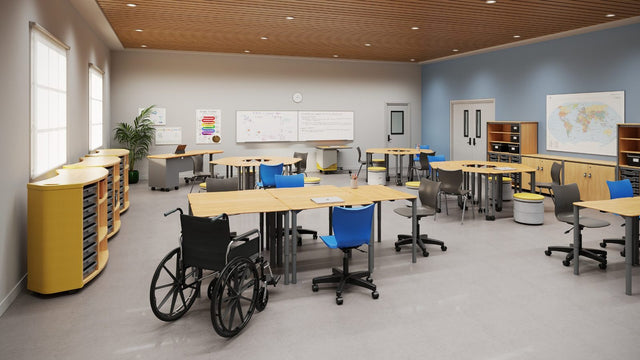
Active seating works best as one option within a flexible classroom that also includes standard chairs, standing-height surfaces and soft seating. See our guides to ergonomic classrooms and movable classrooms.
Browse student chairs and stools or ask Proacademy about samples for your classroom.