

Artificial intelligence is quickly finding its way into education. Teachers use AI tools to draft lesson plans, create practice questions and give faster feedback. Students may use AI tutors, research assistants and writing tools. Schools and districts are still developing policies on how AI should and shouldn't be used, but one thing is already clear: as AI takes on some routine tasks, the value of in-person learning time is shifting.
How AI is being used in schools
- Personalized practice: adaptive programs adjust difficulty to each student's level.
- Tutoring support: AI assistants can explain concepts step by step and answer questions outside class.
- Teacher productivity: drafting rubrics, differentiating materials and summarizing student work.
- Accessibility: speech-to-text, text-to-speech, translation and reading support.
- Data insights: spotting where students are struggling so teachers can intervene earlier.
What changes in the classroom
When individual practice and information lookup can happen anywhere, class time becomes more valuable for things that are uniquely human and social:
- Discussion and debate
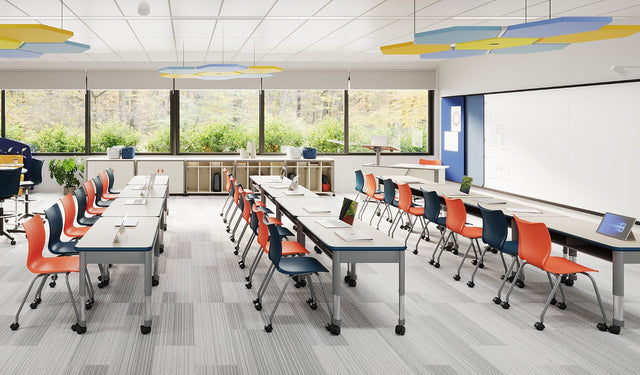
- Collaborative problem-solving and projects
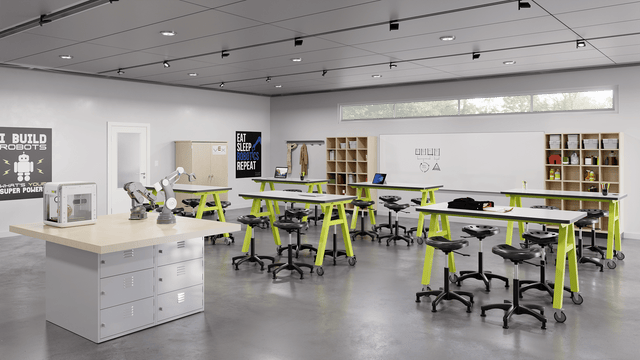
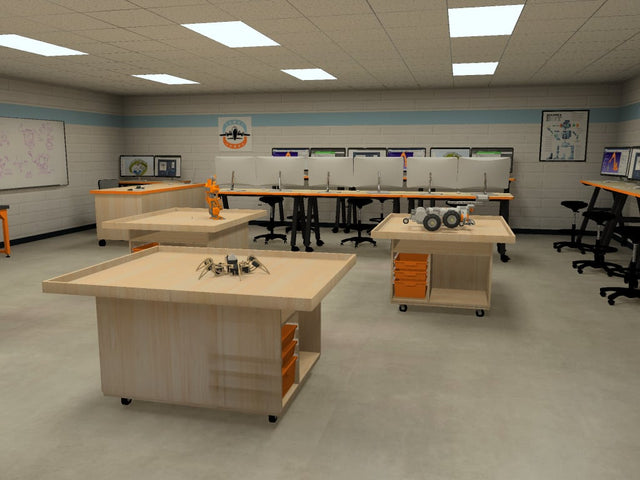
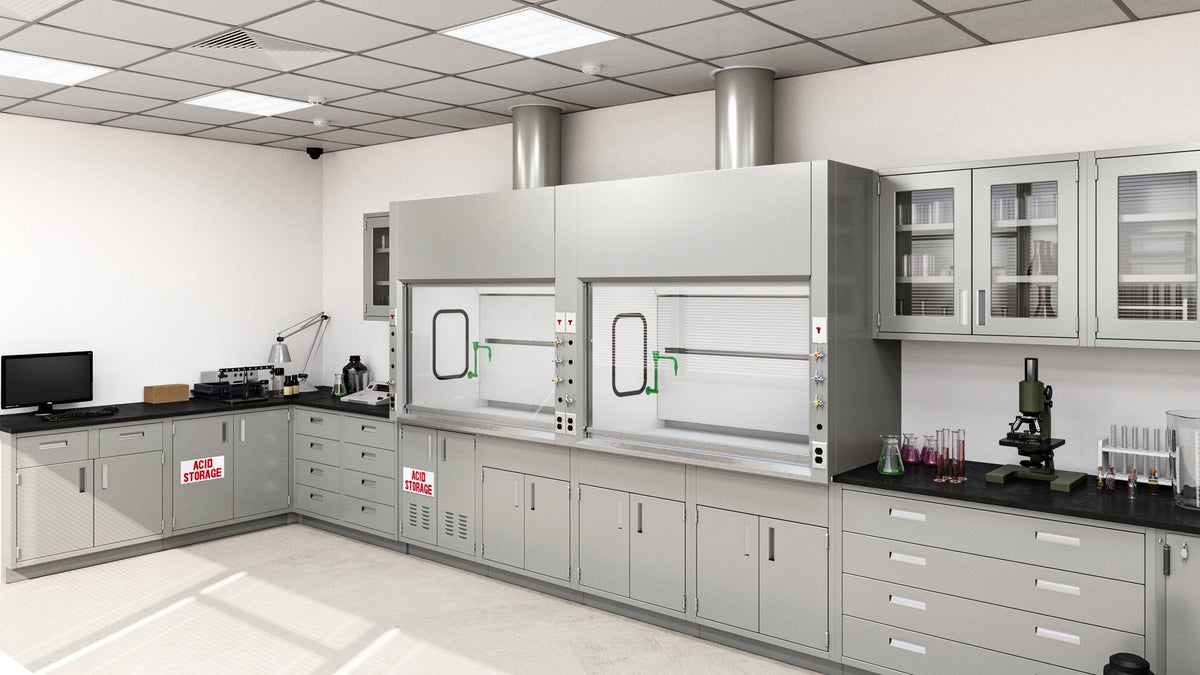
- Hands-on labs, building and making
- Presenting and giving feedback
- One-on-one and small-group coaching from the teacher
These activities need different spaces than a lecture-only room. That is why many schools are moving toward flexible, collaborative classrooms.
Design principles for AI-era classrooms
Spaces for conversation
Clusters, circles and seminar layouts support the discussion and critical thinking that help students evaluate AI-generated information instead of just accepting it.
Spaces for focus
Students still need quiet places to read, think and write independently. A calm corner or individual study area balances the collaborative zones.
Spaces for making
Project-based and hands-on learning grows in importance. Durable work tables, storage for materials, and access to power for tools and devices are key.
Teacher coaching spaces
A small-group table where the teacher can work closely with four to six students makes targeted instruction easier.
Reliable power and connectivity
AI tools run on devices, so charging, cable management and secure storage remain essential.
Keep it human
Technology changes quickly; good learning environments are built around people. A flexible room that supports conversation, collaboration, focus and making will adapt to whatever tools come next.
Planning a future-ready classroom? Read What Is a 21st-Century Classroom? or request a free CAD layout from Proacademy Furniture.