

Height-adjustable desks have moved from offices into classrooms, and for good reason. In a room where students come in many different sizes, a desk that adjusts is one of the simplest ways to make sure everyone is comfortable. Sit-stand models go further, giving students the option to work standing up.
Types of adjustable classroom desks
- Tool-adjustable desks. Leg height is set with a pin, knob or simple tool. Ideal for setting a room up for a specific grade at the start of the year. Affordable and very durable.
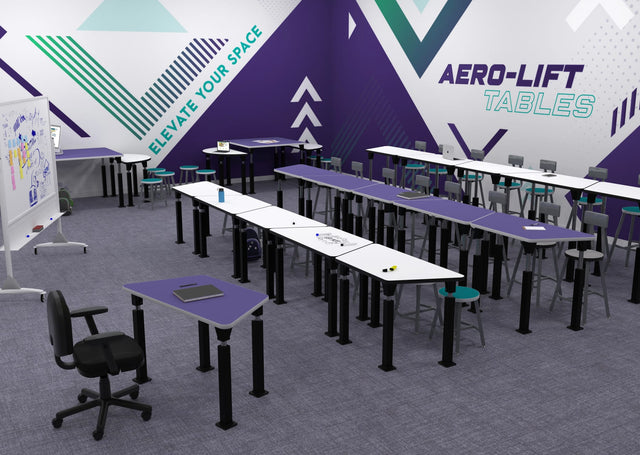
- Sit-stand desks. Students can raise and lower the work surface during the day, usually with a lever, gas spring or crank. Great for movement and focus.
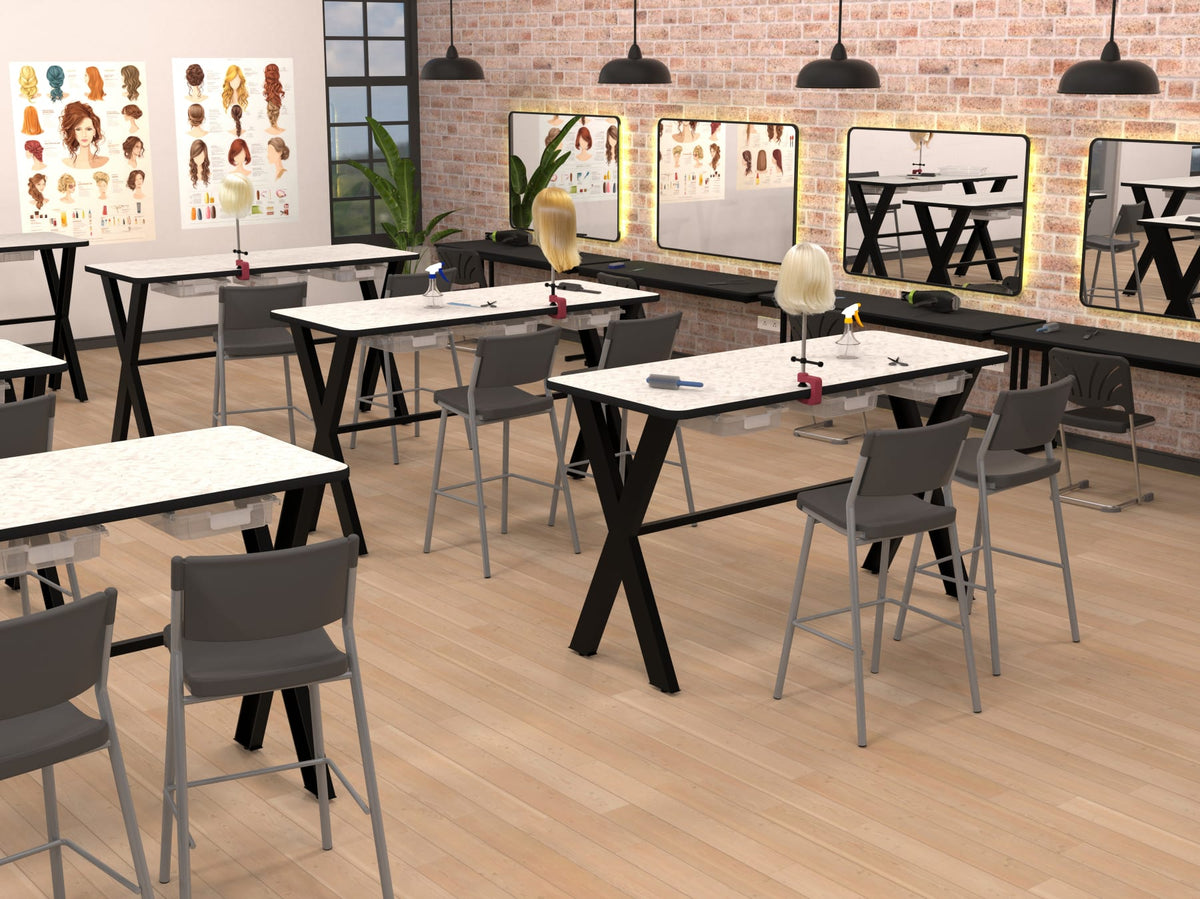
- Standing-height desks with stools. A fixed taller desk paired with a stool lets students perch or stand without any mechanism.
- Adjustable tables. Collaborative tables that can be set at seated, counter or standing height for group work.
Benefits for students
A better fit for every child
Even in one grade, students can differ by a foot or more in height. Adjustable desks let each student work at a comfortable height, which supports good posture and reduces discomfort.
Healthy movement
Being able to stand for part of a lesson breaks up long periods of sitting. Many teachers report that students who struggle to sit still focus better when they can stand.
Longer useful life
Because adjustable desks can be reset for a different grade, they stay useful when enrollment shifts or rooms are reassigned.
Benefits for teachers
Teachers spend much of the day standing, walking and leaning over student work. A height-adjustable teacher desk or mobile lectern lets them switch between sitting and standing, and work comfortably at eye level with students during small-group instruction.
What to look for
- Adjustment method: simple and safe for the age group. Younger students should not be able to change heights unsupervised.
- Stability: a solid frame that doesn't wobble at the highest setting.
- Durable top: high-pressure laminate edges that resist chips, with options like whiteboard or dry-erase surfaces.
- Storage: book boxes or hooks that work at every height.
- Mobility: casters on some models make reconfiguring the room easier.
- Warranty: mechanisms and frames backed by a solid manufacturer warranty.
Start with a pilot
If you are not sure whether sit-stand desks are right for your school, try a few in one classroom. Ask teachers and students how they use them over a few weeks, then decide on a wider rollout.
Explore our student desks or ask Proacademy for samples and a free layout. We deliver, assemble and place every piece.