

Ordering classroom furniture by grade level is a good start, but children of the same age vary a lot in height. Getting sizes right matters: a chair that is too tall or a desk that is too low leads to poor posture, discomfort and distraction. This guide explains how to choose the right sizes and how to handle mixed-height classes.
How sizing works
Two measurements matter most:
- Seat height: the distance from the floor to the top of the chair seat. The student's feet should rest flat on the floor with knees bent at about 90 degrees.
- Work-surface height: the height of the desk or table top. Forearms should rest comfortably with relaxed shoulders. As a rule of thumb, the work surface sits roughly 9 to 11 inches above the seat.
General sizing guide by grade
The ranges below are typical starting points used across the school furniture industry. Always check the specific manufacturer's sizing chart, and when in doubt, measure a few students.
| Grade level | Typical seat height | Typical desk / table height |
|---|---|---|
| Pre-K | 10"–12" | 18"–20" |
| Kindergarten–1st | 12"–14" | 20"–24" |
| 2nd–3rd | 14"–15" | 24"–26" |
| 4th–5th | 15"–16" | 25"–27" |
| 6th–8th | 16"–18" | 27"–29" |
| 9th–12th & adults | 18" | 29"–30" |
Quick fit check in the classroom
- Feet: flat on the floor, not dangling or tucked under the chair.
- Knees: roughly level with or slightly lower than the hips.
- Thighs: a two-finger gap between the front edge of the seat and the back of the knee.
- Elbows: about level with the desk surface when arms hang naturally.
- Back: touching the chair back while writing.
Handling mixed heights in one room
Most classes include students who are well above or below average height. A few ways to accommodate everyone:
- Order two sizes for the same room, for example mostly 16" chairs with a handful of 14" or 18" chairs.
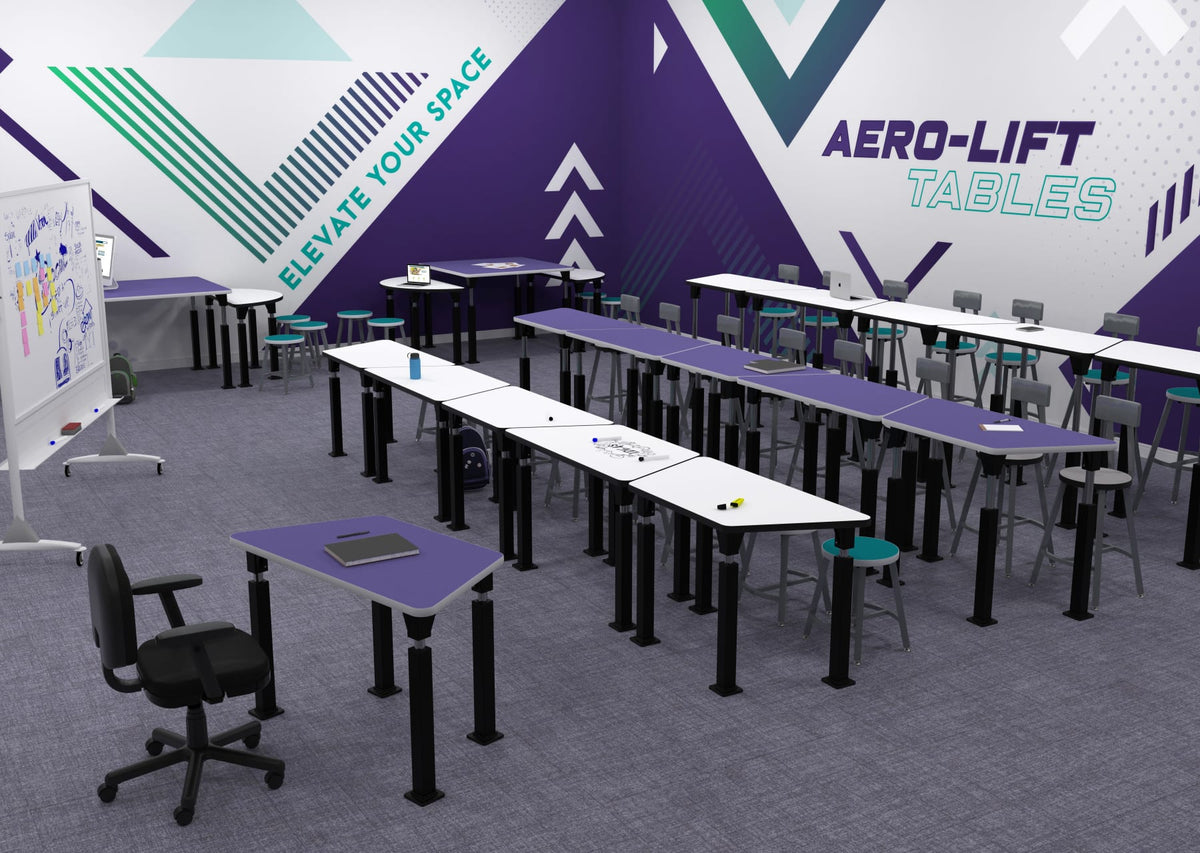
- Choose height-adjustable desks that can be set for each student and changed as they grow.
- Use footrests for smaller students in shared spaces like libraries and labs.
- Add stools and standing-height tables, which naturally fit a wider range of body sizes.
Special spaces
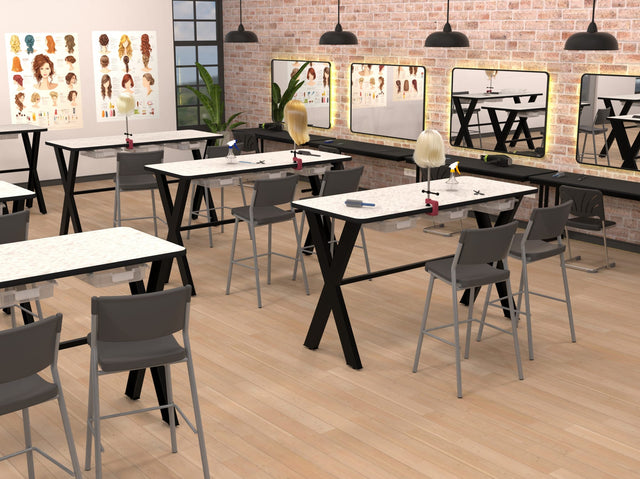
Science labs, art rooms and makerspaces often use counter-height (36") or bar-height (42") work surfaces with stools. Match stool height to the surface: roughly 24"–26" stools for 36" counters and 29"–30" stools for 42" tables.
Not sure what to order?
Browse our student chairs and student desks, or let us help. Proacademy Furniture can recommend sizes for every grade, send samples to try, and prepare a free CAD layout. Request a quote or call 973-246-8067.